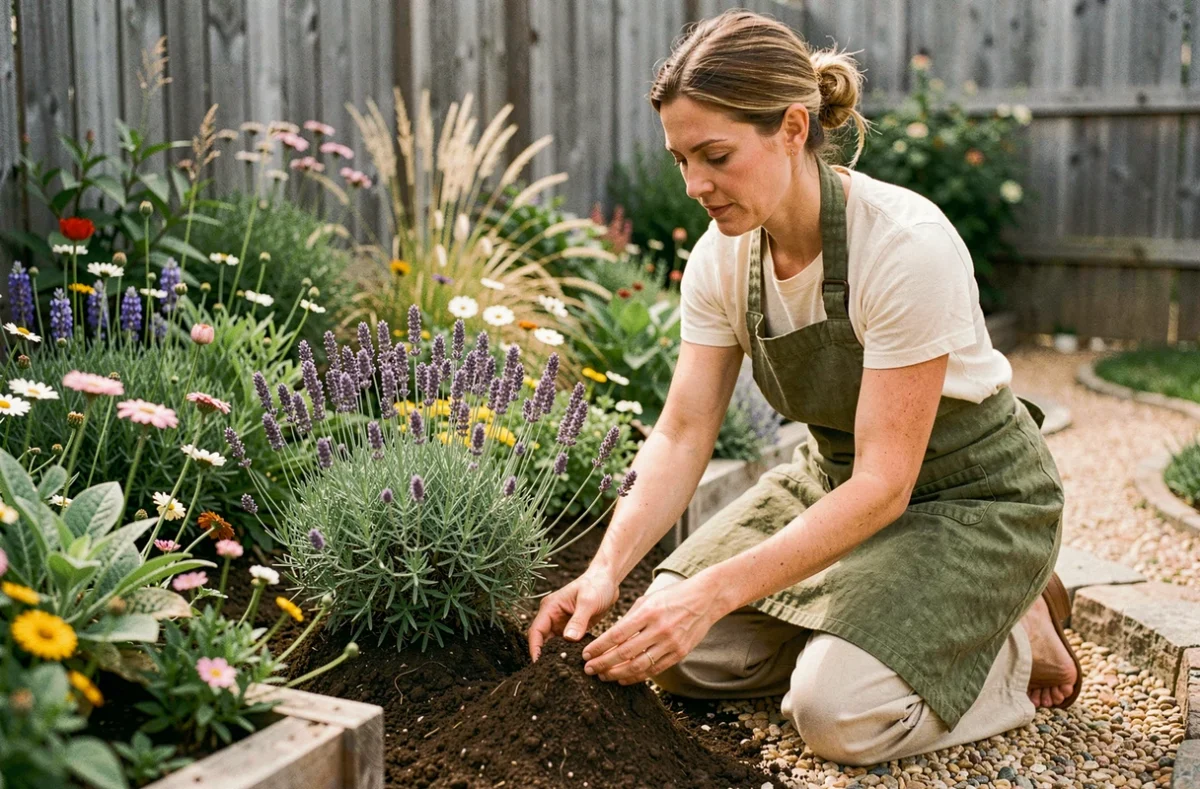
A natural garden is not just about letting the grass grow. The choice of soil, water management, and plant selection form a system where each parameter influences the others. Comparing these variables helps understand where to focus efforts to achieve a harmonious garden with limited maintenance.
Drainage soil or clay soil: what the terrain imposes on the natural garden
Before choosing any plant, the type of soil guides the entire project. Sandy soil drains quickly and dries on the surface, which is suitable for lavenders, rosemaries, and sedums. Clay soil retains water longer, favors certain perennials but suffocates roots in case of compaction.
The report from Le Monde (September 2026) on adapting gardens to climate change highlights a rarely discussed point: limiting separations between paths and flower beds to avoid trapping roots in small volumes of soil. This approach alters the very design of the terrain, well before the choice of species.
Park managers also recommend reducing mowing at the base of trees. Tall grass retains soil moisture and protects microfauna. To explore adaptations suitable for different types of terrain, the site jardindhelena.be presents several garden configurations that incorporate these principles.
Garden without watering or reasoned watering: comparative table of the two approaches
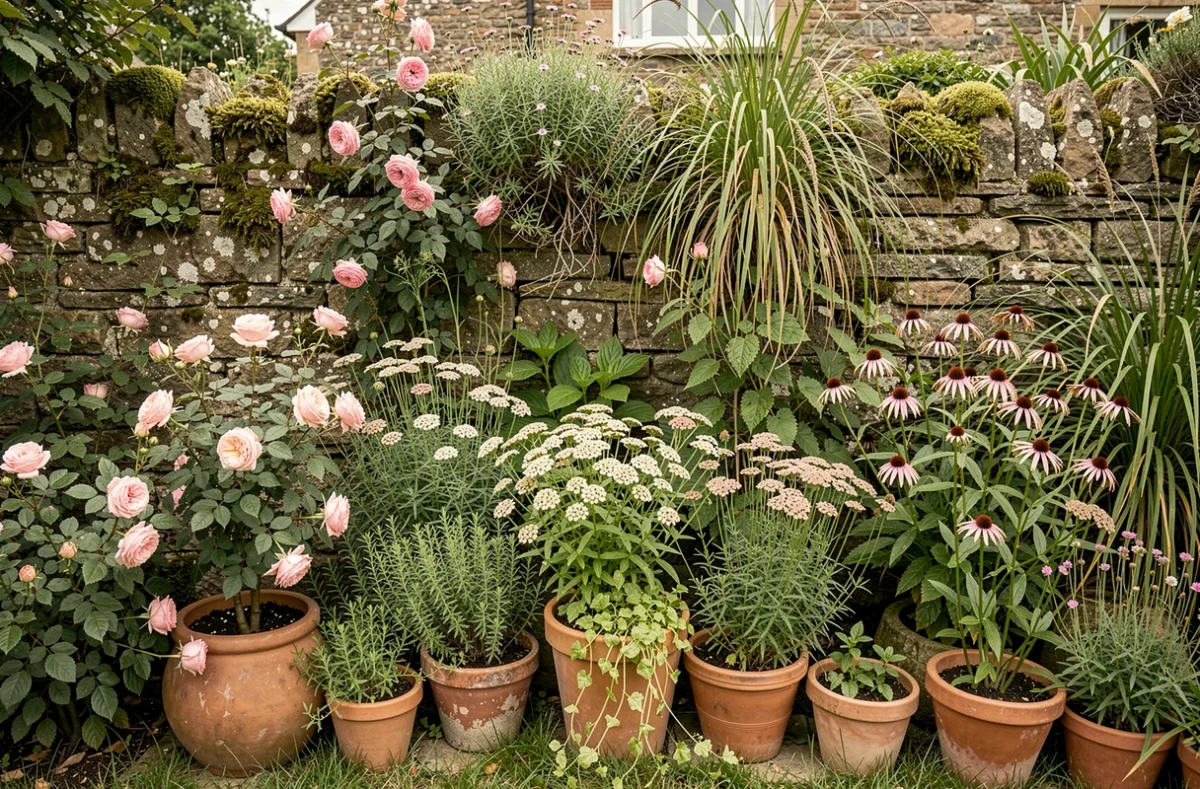
The question of water divides gardeners. Two strategies coexist, with different constraints and results.
| Criterion | Garden without watering | Reasoned watering |
|---|---|---|
| Installation phase | Abundant watering during the first years to encourage deep rooting | Drip system or rainwater collector from planting |
| Plant palette | Plants suited to dry conditions: lavender, verbena, sages, sedums | Wider choice including perennials, shrubs, and some water-hungry plants |
| Long-term maintenance | Durable mulching, almost no artificial water supply after rooting | Regular monitoring of the watering system, seasonal adjustments |
| Required soil | Drainage soil, amended if necessary | Any type of soil, with adaptation of water volume |
| Aesthetic result | Mediterranean or dry meadow appearance | More diversity of blooms and textures throughout the seasons |
The feedback from the Terra Botanica garden, reported by Modes et Travaux (September 2026), shows that a space of 700 m² has not been artificially watered for about six years. The method relies on generous watering in the first years, followed by complete weaning thanks to adapted plants and permanent mulching.
In contrast, a garden with reasoned watering offers more flexibility in plant composition. It all depends on the desired aesthetic palette and the time devoted to water management.
Drought-tolerant plants and biodiversity: a balance to find
Choosing drought-resistant plants does not mean impoverishing the garden’s biodiversity. Several nectar-rich species tolerate dry soils perfectly and attract pollinators and beneficial insects.
- Bush sages bloom for a long period and nourish bees and butterflies without requiring watering once established
- Sedums cover the ground quickly, limit evaporation, and provide refuge for crawling insects
- Buenos Aires verbena, tall and airy, structures a flower bed while attracting foragers until autumn
An organic mulch of several centimeters complements this selection by maintaining residual moisture and feeding soil life. Wood chips, fallen leaves, or shredded material gradually replace manual weeding.
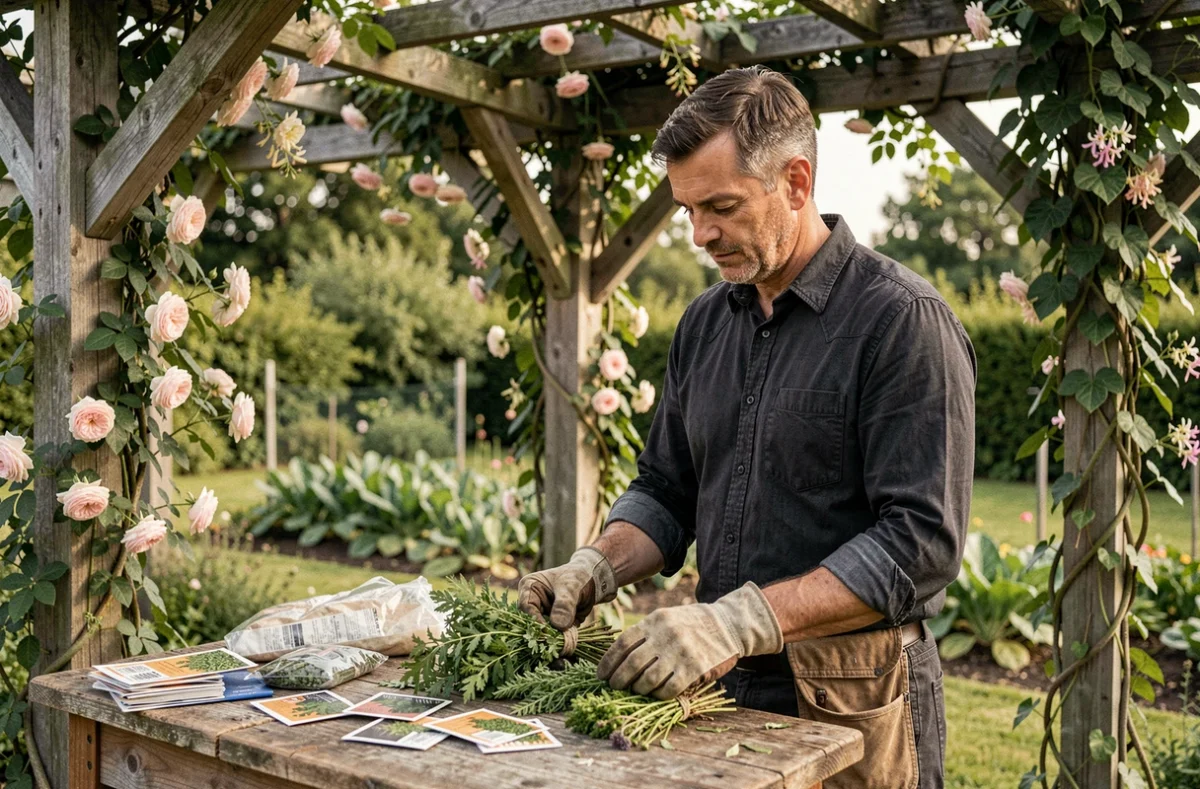
Regulations are also evolving regarding the protection of existing vegetation. The destruction of a hedge is now governed by a unique declarative regime, according to the Ministry of Ecological Transition. This rule does not concern regular pruning or trimming but applies before any removal of a hedge to reshape an outdoor space.
Light pollution and nocturnal fauna: a neglected parameter
Outdoor lighting disrupts nocturnal wildlife. Bats, hedgehogs, and night-pollinating insects are directly affected by overly bright or poorly directed lights.
Reducing light pollution in the garden involves simple actions: turning off decorative lights after a certain hour, directing spotlights downward, and favoring warm color temperatures. A natural and harmonious garden is not only thought of during the day.
- Install motion detectors instead of permanent lighting
- Choose directed beam fixtures that do not light up the sky
- Create intentionally dark areas where nocturnal fauna can move without stress
A garden welcoming to nocturnal biodiversity naturally promotes pest regulation. Bats consume significant amounts of mosquitoes and harmful moths.
The choice of soil, watering strategy, plant selection, and light management form four concrete levers. A well-analyzed terrain from the start reduces maintenance for years. The Terra Botanica garden, self-sufficient in water after a few installation seasons, illustrates what a rigorous initial diagnosis can produce over time.