
Cardiac surgery escapes the usual rules of the game: barely a handful of unfilled positions in 2023, a stratospheric level of selection, and yet, it ranks among the least favored in the annual residency ranking. Neither technical brilliance nor the scarcity of spots is enough to attract the crowd. The endless hours and constant pressure weigh heavily in the balance, discouraging more than one. At the time of choices, prestige does not mean everything: here, daily life often outweighs reputation.
This paradox is also observed elsewhere: some fields, classified as “difficult,” attract more than others, which are considered less selective. The assignment figures tell a complex story, far removed from a simple barometer of academic difficulty. Between ambitions, constraints, and on-the-ground realities, preferences evolve, questioning our preconceived notions of what constitutes the “difficulty” of a specialty.
Medical specialties in 2025: overview, developments, and selection criteria
The year 2025 is shaping up to be a turning point for medical specialties. The numerus apertus, coupled with the EDN reform, blurs the lines and redistributes the cards. The time when tradition and prestige were enough to guide choices is fading. Now, residents carefully weigh scientific aspirations, workload, and work-life balance. While reconstructive and aesthetic plastic surgery remains highly sought after, other disciplines, such as maxillofacial surgery or tropical infectious diseases, struggle to convince, despite their central role in public health.
The choice of a specialty today relies on a careful analysis of several criteria:
- The actual workload and service pressure
- Access to technological innovation, increasingly decisive
- The diversity and flexibility of practice modes
In this landscape, radiology and medical imaging attract with their technicality and more controlled work organization. Medical biology appeals to those seeking an analytical, versatile approach, less subject to on-call duties. Other fields, such as occupational health medicine, benefit from a renewed interest due to prevention policies, yet fail to erase a persistent attractiveness deficit.
Each year, the National Management Center, supported by the National Council of the Order of Physicians, publishes the fill rates. These data provide a faithful snapshot of trends: some disciplines are fully booked, while others leave positions vacant, with no direct relation to their utility or reputation. So, does the most difficult medical specialty really concentrate the maximum of skills, sacrifices, or responsibilities? To delve deeper into this topic, the dedicated page offers a detailed analysis.
This diversity of medical specialties speaks volumes about the transformation of the sector and the new expectations of residents. Between innovations, organizational constraints, and the search for meaning, the choice of a medical path plays out on all fronts. More than a job, it is an entire existence that unfolds through this choice.
Ranking 2024-2025: which specialties are considered the most difficult by students?
The ranking of medical specialties 2024-2025 confirms what many residents experience daily: reconstructive and aesthetic plastic surgery tops the list of the most demanding fields. Fierce selection, precise technical gestures, zero-defect pressure: everything contributes to placing this discipline at the top of the ranking. The very first ranks are fiercely contested, an indicator closely monitored by the National Management Center to assess competitiveness and the level of demand.
Following closely, maxillofacial surgery and ophthalmology also stand out, dominating the choices of the highest-ranked. The fill rates nearly reach maximum levels each year, whether at Paris Cité, Sorbonne Paris Nord, or Toulouse III Paul Sabatier. The price of this success? An intensive pace, additional years of training, and a mental load that never really lightens.
Just behind, dermatology and venereology makes its mark. It combines clinical expertise, innovations, and the sought-after work-life balance by new generations. Medical biology and public health are gaining ground, driven by the evolution of the sector, but remain less accessible outside the top rankings.
The choice of a medical specialty thus hinges on success rates, academic pressure, and future prospects. In each faculty, from Lille to Lyon, arbitration strategies are taking shape. The common thread? The most coveted positions are rarely synonymous with lesser difficulty.
Why do some specialties remain a major challenge despite sector developments?
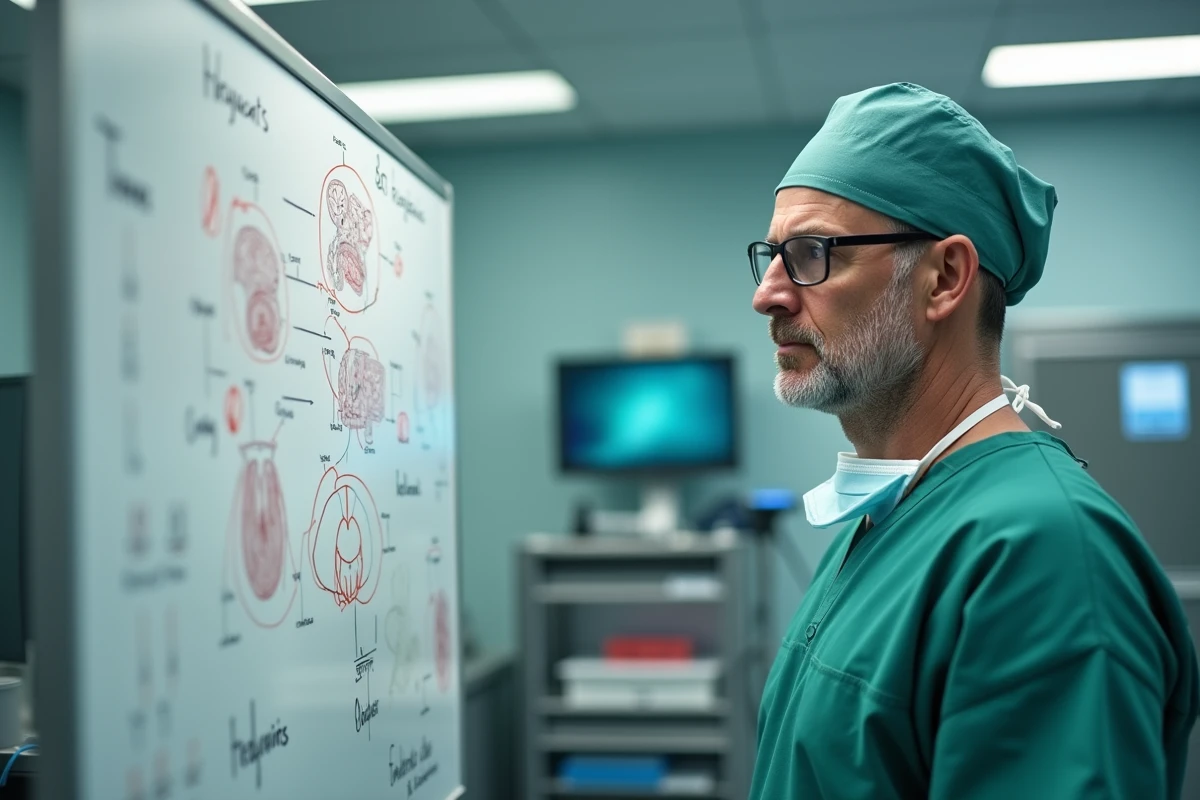
Technical advancements are shaking up medicine, but some medical specialties resist simplification. In the corridors of emergency rooms, the specter of burnout still looms for residents in anesthesia-resuscitation or emergency medicine. The frantic pace, the responsibility of vital actions, the need for constant vigilance: automation does not replace presence or the tension that permeates these fields.
Psychiatry and geriatrics face an entirely different challenge. Here, complexity lies not in technique, but in the human dimension. Chronic conditions, psychological suffering, isolation: residents learn patience, uncertainty management, sometimes far from immediate productivity. Despite adjustments made by the National Council of the Order of Physicians, the balance between professional and personal life remains precarious.
As for radiology and medical imaging or medical biology, technological innovation disrupts practices, but the demands do not lessen. Knowing how to engage in continuous training, assuming diagnostic responsibility, coping with decision-making solitude… These medical specialties spare no one. Practice modes are evolving, institutional recognition is progressing, but the pressure and expectations remain of a rare intensity.
Ultimately, the difficulty of a specialty is not measured solely by technicality or hours worked. It lies in human complexity, in the ability to confront uncertainty, to endure the distance. The choice of a medical path continues to involve much more than a career: it is a life trajectory, where every decision matters at every stage.