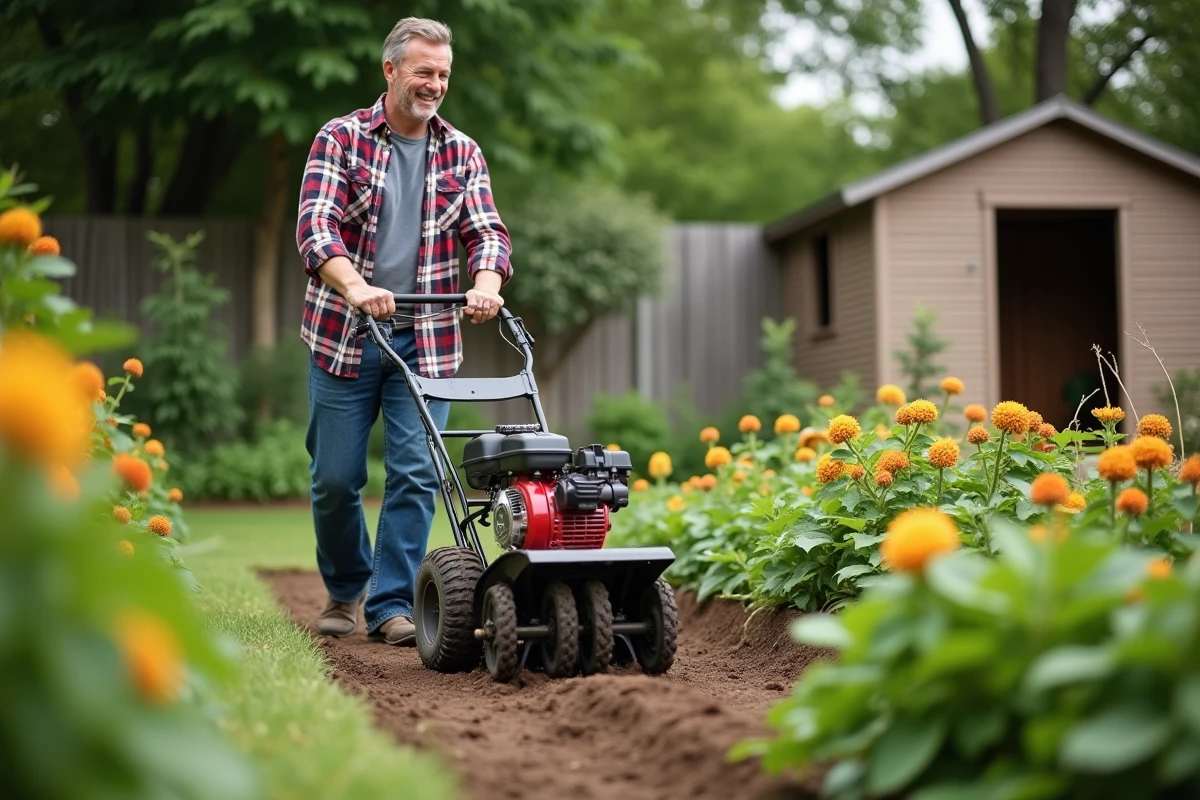
A thermal tiller does not just turn the soil. In 2026, some models boast powers that far exceed the standards of five years ago, with redesigned safety systems to limit domestic accidents. European regulations on emissions have also changed the game, forcing manufacturers to rethink their engines without sacrificing efficiency.
Experienced users notice it: not all four-stroke engines are created equal, and ergonomics vary greatly from one model to another. The price gap between entry-level and professional references continues to surprise, but does not always guarantee superior quality.
Thermal or electric tiller: how to choose the ideal solution for your garden?
The debate is far from over between advocates of thermal power and those who bet on the practicality of electric. To differentiate between these two worlds, one must consider the nature of your land, the size of your garden or vegetable patch, and even how often you plan to use the machine.
The thermal tiller is essential as soon as you move beyond simple flower beds to tackle substantial areas, heavy soils, or land that has never been worked. Its gasoline engine, free from the constraints of cables or batteries, offers flawless autonomy. These models effortlessly handle compact soils, often provide more than 50 cm of working width, and can sometimes go down to 35 cm. Their weight, frequently over 30 kg, ensures stability but requires a bit of muscle to maneuver.
On the other hand, the electric tiller targets modest gardens and those who want to prioritize lightness, quietness, and machines that are easy to maintain. Wired or battery-operated, the electric model can be handled in seconds, but quickly reaches its limits for large areas or tough soils.
To refine your choice, the comparison of the best thermal tillers highlights criteria not to be overlooked:
- engine power
- working width and depth
- ergonomics
- safety
- maintenance costs
- availability of spare parts
Another distinction is the difference with the cultivator: the tiller mainly works the top layer, while the cultivator will turn the soil deeply.
Before making a decision, take the time to analyze the configuration of your garden, your usage rhythm, and the types of crops targeted. For a generous vegetable garden or an intensive garden, the thermal option remains the preferred choice. For restricted spaces and occasional use, the electric model perfectly fulfills its role without unnecessary complications.
Essential criteria for selecting a high-performing tiller suited to your needs
Power, width, depth: the technical triptych
In the field, engine power makes all the difference when it comes to tackling compact soils or energy-hungry plots. A model with at least 3 HP often proves wise for a medium-sized vegetable garden. The working width, generally between 30 and 80 cm, directly influences speed and efficiency over large areas. As for depth, it determines the ability to properly incorporate fertilizers and amendments: a minimum of 15 cm, up to 35 cm for the heaviest soils.
Here are other technical elements to consider:
- Number of tines: the more there are, the finer the soil is fragmented.
- Reverse gear: a real plus for getting the machine out of a blockage or maneuvering calmly.
- Transport wheels: they make life easier when moving the tiller over uneven terrain.
Comfort, safety, longevity: do not overlook any aspect
The ergonomics of the handle, the presence of an anti-vibration system, or the simplicity of the controls play a direct role in the quality of work, especially during long sessions. A well-designed emergency stop limits risks. The robustness of the frame, easy access to spare parts, and simple maintenance are guarantees of a sustainable investment.
The purchase price is not everything. Remember to compare:
- versatility (possibility of adding accessories, available adjustments)
- noise level
- fuel consumption
- emissions for a more responsible choice
A good thermal tiller must combine power, maneuverability, and reliability, without ever neglecting safety.
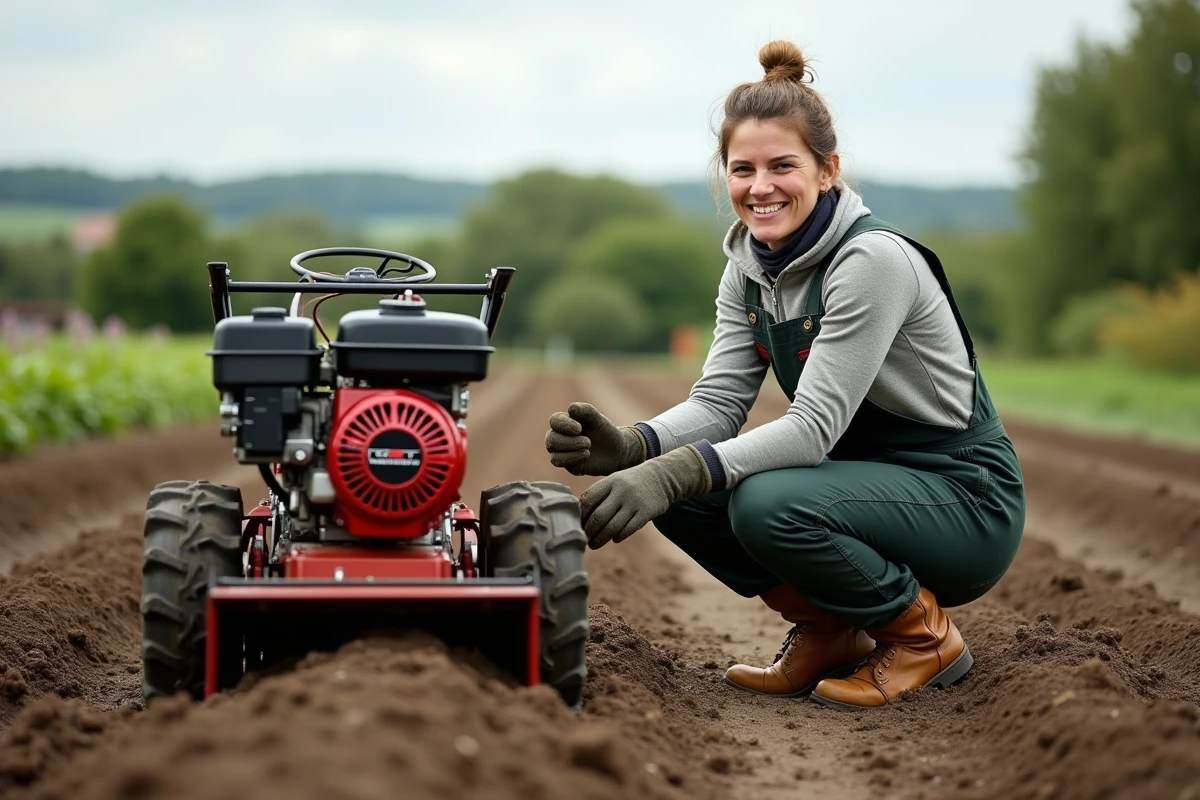
Our 2026 selection: detailed reviews and tips for buying the best thermal tiller at the best price
Honda FG320: reliability and efficiency for large areas
The Honda FG320 tiller excels in the segment of machines designed for large spaces. Its 3.3 kW four-stroke thermal engine ensures effective penetration and a width of 80 cm, ideal for handling vast plots. The adjustable handle and reverse gear simplify maneuvers, even on difficult soils. Honda maintains its reputation for longevity: spare parts available, hassle-free maintenance, and safety assured.
Einhell GC-MT 3060 LD: the smart choice for budget-conscious buyers
More affordable, the Einhell GC-MT 3060 LD tiller targets those looking for a maneuverable tool without serious compromises on efficiency. With its 3 HP and up to 23 cm of working depth, it perfectly meets the needs of family vegetable gardens. Its compact format, complemented by transport wheels, facilitates navigation between flower beds and storage. On the safety side, the stop system is responsive and reassuring.
Mantis 7263-12-14: the reference for small spaces
Light and compact, the Mantis 7263-12-14 tiller impresses with its maneuverability. It easily fits into flower beds or narrow rows, powered by a reliable thermal engine and a working width of 23 cm. Its low maintenance and low consumption will appeal to meticulous gardeners who want to preserve soil structure and optimize their time.
Before buying, keep these recommendations in mind to choose the model that suits you:
- Adapt the machine to the size of your garden.
- Compare working depth and width according to the nature of the soil.
- Consider the frequency of use and the desired maneuverability.
In the end, it is your requirements and the reality of your land that will make the difference. The best tiller is not the one that shines on paper, but the one that proves itself, season after season, in the reality of the garden.