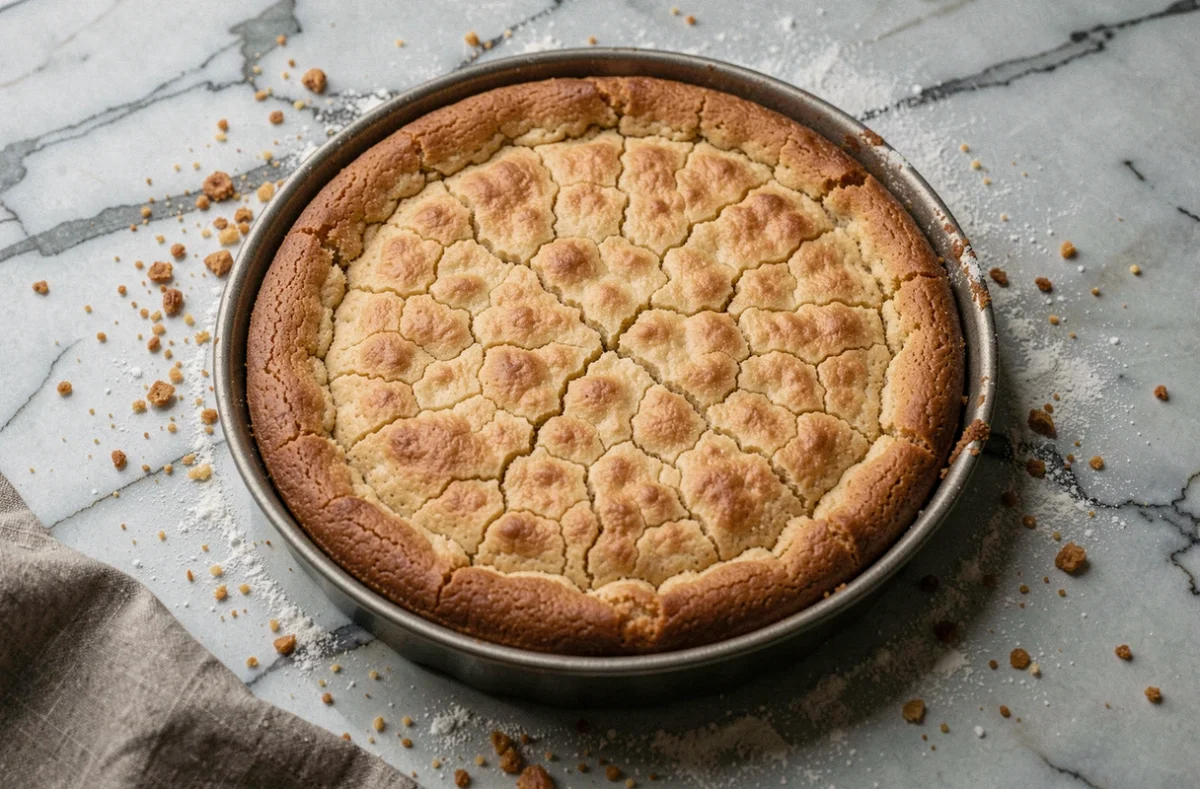
When unmolding a dessert and the base sticks, crumbles, or has the texture of damp cardboard, the problem almost never comes from the recipe itself. It comes from humidity. A crispy biscuit for a cake base relies on a simple principle: keep water at bay, from the mixture until serving.
Here we detail the technical points that make the difference between a base that cracks cleanly under the spoon and one that softens as soon as it comes out of the refrigerator.
Humidity Migration: The Real Problem of Softened Crispy Biscuit
Most crispy bases do not fail during preparation. They fail later, during assembly or storage. The filling (mousse, cream, bavarois) releases water that migrates to the biscuit by capillarity. After a few hours in the refrigerator, a perfectly dry praline crisp becomes soft.
A layer of melted chocolate applied to the biscuit before assembly blocks this migration. White chocolate works particularly well for neutral bases because it does not color and sets quickly. It is spread with a brush or offset spatula in a thin, even layer, then allowed to crystallize before pouring the wet preparation on top.
The other often-overlooked source of humidity is condensation. A dessert taken out of the freezer into a warm kitchen sweats. This water settles everywhere, including on the base. To limit this phenomenon, it is better to let it defrost in the refrigerator rather than at room temperature.
Find more gourmet ideas on Toutes Les Recettes to vary the bases according to your desserts.
Praline Crisp and Feuilletine: Dosage and Texture
The classic trio (praline, melted chocolate, feuilletine) seems simple. Three ingredients, no baking, ready in a few minutes. The trap is the ratio.
Too much chocolate and the base becomes a compact block, difficult to cut cleanly. The spoon slips, the dessert cracks. Too much feuilletine and the mixture does not hold; it crumbles upon unmolding. The praline acts as a fatty binder between the chocolate and the feuilletine, providing cohesion without rigidity.
Variations That Change the Texture
Feuilletine (crumbled lace pancakes) remains the reference, but it can be replaced depending on the desired effect:
- Crushed dry biscuits like speculoos or butter cookies create a denser base with a more pronounced flavor, ideal under a cheesecake or milk chocolate mousse.
- Toasted coconut adds a different, more irregular crispiness that works well with exotic fruit preparations.
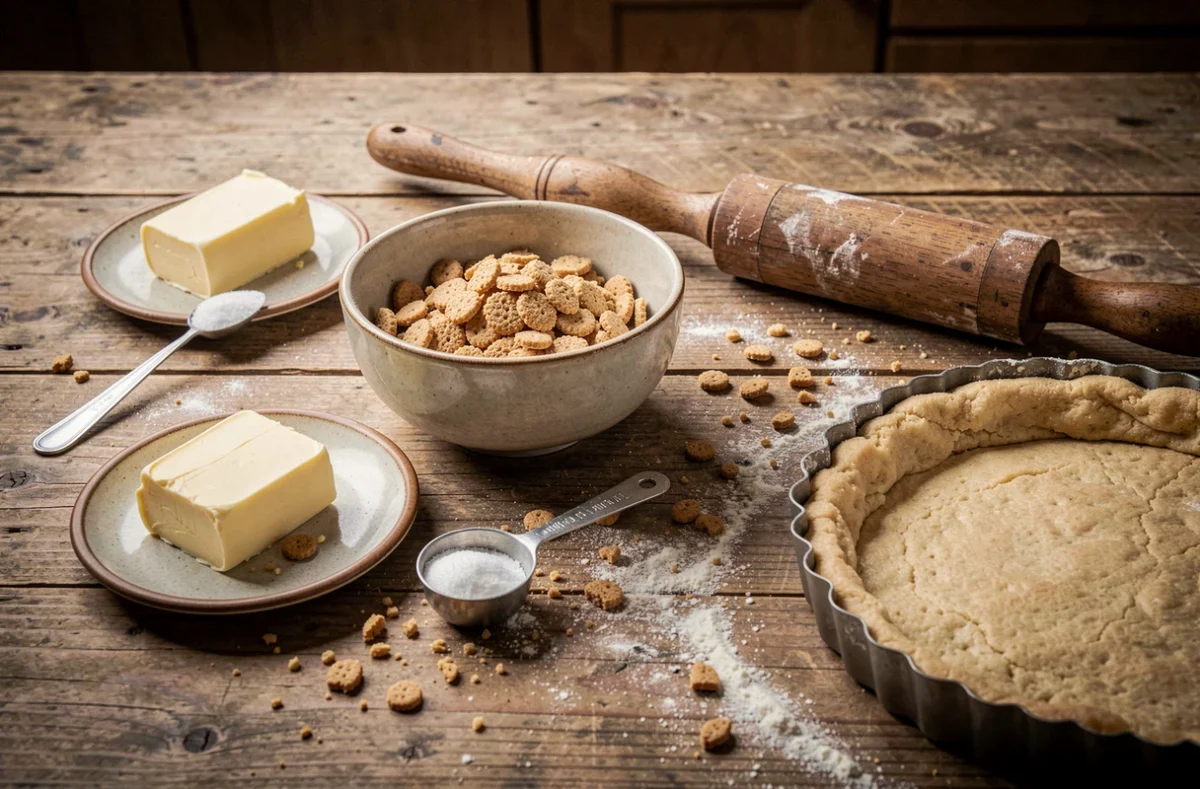
- A reconstituted crumble (a mixture of butter, flour, sugar, baked, then crumbled) offers a sandy texture, perfect when a sharp contrast with a smooth mousse is desired.
In all cases, the dry part is incorporated into the melted chocolate off the heat, stirring quickly. The chocolate should not be scorching; otherwise, it will soften the feuilletine before it is even spread in the ring.
Cooling and Storing the Crispy Cake Base
As mentioned: humidity is the enemy. Cooling is the moment when many preparations lose their crunch without us understanding why.
A still-warm biscuit wrapped or covered traps its own steam. This steam condenses upon contact with the film or the cold container, and the crisp absorbs this water. The rule is clear: let it cool completely on a rack, in the open air, without stacking, before any packaging.
Store Biscuit and Filling Separately
The refrigerator is not the ally of a dry crisp. The air is humid, and a biscuit stored uncovered in the fridge softens within hours. When preparing elements in advance, the most reliable method is to store the crispy base in an airtight container at room temperature, separate from the filling, and assemble the cake as close to serving as possible.
For a dessert that needs to go in the freezer, the process is reversed: assemble the cake, freeze it, and accept that the crisp will be slightly less vibrant at the time of tasting. It’s a logistical compromise, not a technical error.
Reviving a Softened Crisp: Low-Temperature Oven Drying
A base that has lost its crunch is not necessarily lost. Before throwing everything away, you can try gentle drying. This method works best on dry bases (crushed biscuits, crumble) and less effectively on a praline crisp already assembled in a dessert.
Spread the crisp on a baking sheet lined with parchment paper, bake at low temperature for a short time, then let cool completely on a rack. The goal is to evaporate the residual moisture without restarting a cooking process that would alter the color or taste.
Feedback varies on this point: depending on the amount of fat (butter, chocolate, praline), the result can be uneven. A very fatty crisp does not dry as well as a base made from dry biscuits. When in doubt, test on a small portion before putting everything back in the oven.
Baking the Biscuit Base: Heat and Thickness
For bases that go in the oven (shortcrust pastry, crumble, butter cookie crumbs), two parameters matter more than the recipe itself: the thickness of the layer and the actual heat of the oven.
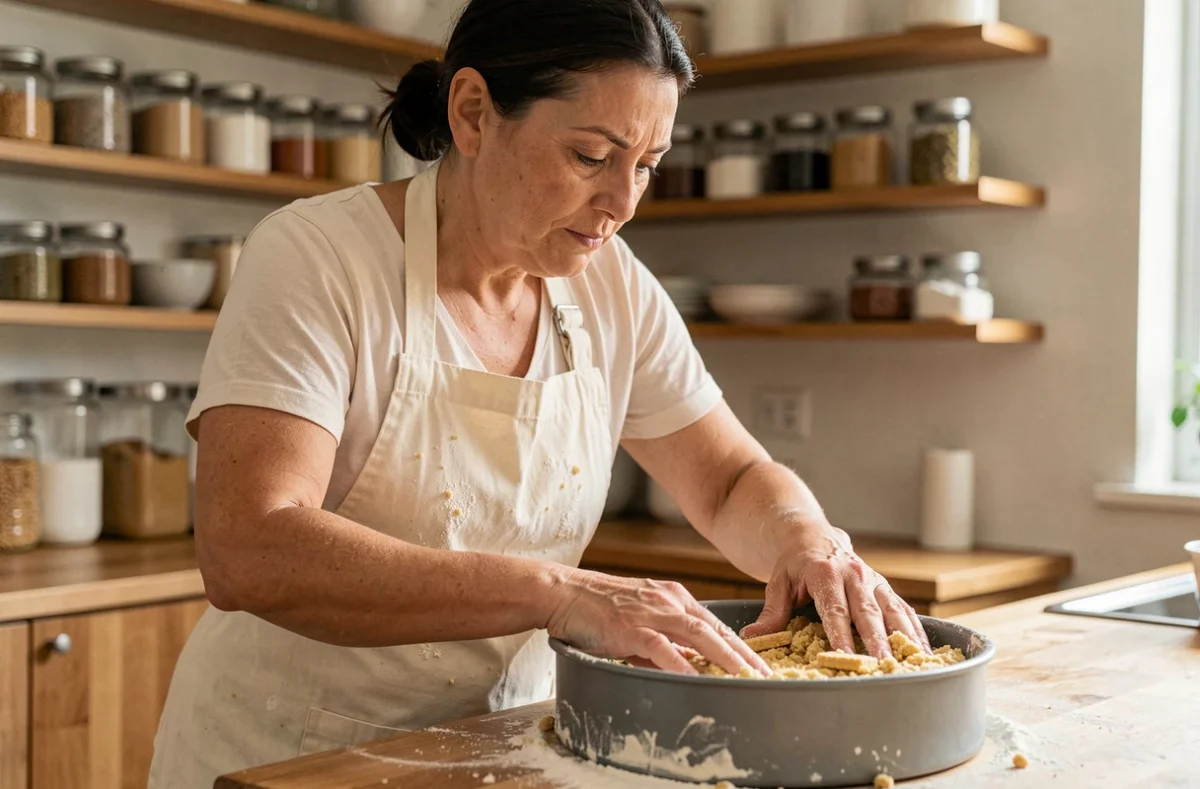
A layer that is too thick cooks on the surface and remains soft in the center. Aim for an even thickness, firmly packed with the back of a glass or spoon. Packing is what gives stability upon unmolding: without it, the base crumbles.
The baking sheet also matters. A cold sheet placed in a hot oven creates a thermal shock that promotes quick drying of the base. Conversely, a preheated sheet can burn the bottom of the biscuit before the top is cooked. Place the sheet in the middle of the oven, on the rack, not directly on the bottom.
A successful crispy cake base ultimately relies on a few key points: blocking humidity with a layer of chocolate, respecting the ratio between fatty binder and dry elements, cooling in the open air without haste, and assembling as late as possible. The rest is a matter of taste.